


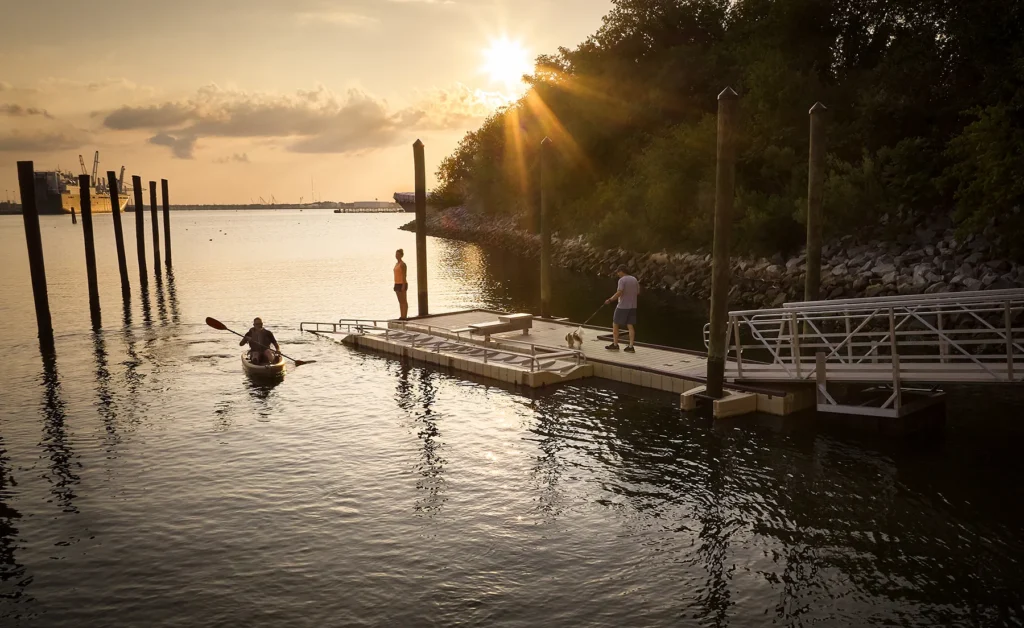
A tiny fish called a mummichog was the canary in the coal mine. In the early 1990s, scientists discovered that 90 percent of the mummichogs harvested from a section of the Elizabeth River in Norfolk had precancerous lesions. The river and its tributaries were dying—choked by decades of pollution from industrial discharge and malfunctioning sewer lines, as well as lawn fertilizer, motor oil, pet waste, antifreeze, and kitchen grease leeching into the river from waterfront neighborhoods. The damage was severe, and the future looked bleak. Yet residences and businesses along with local, state, and federal economies are tied to the Elizabeth River in Tidewater and depend on its vitality. But this waterway was singled out as one of the most highly polluted bodies of water in the entire Bay watershed.


